 Maslin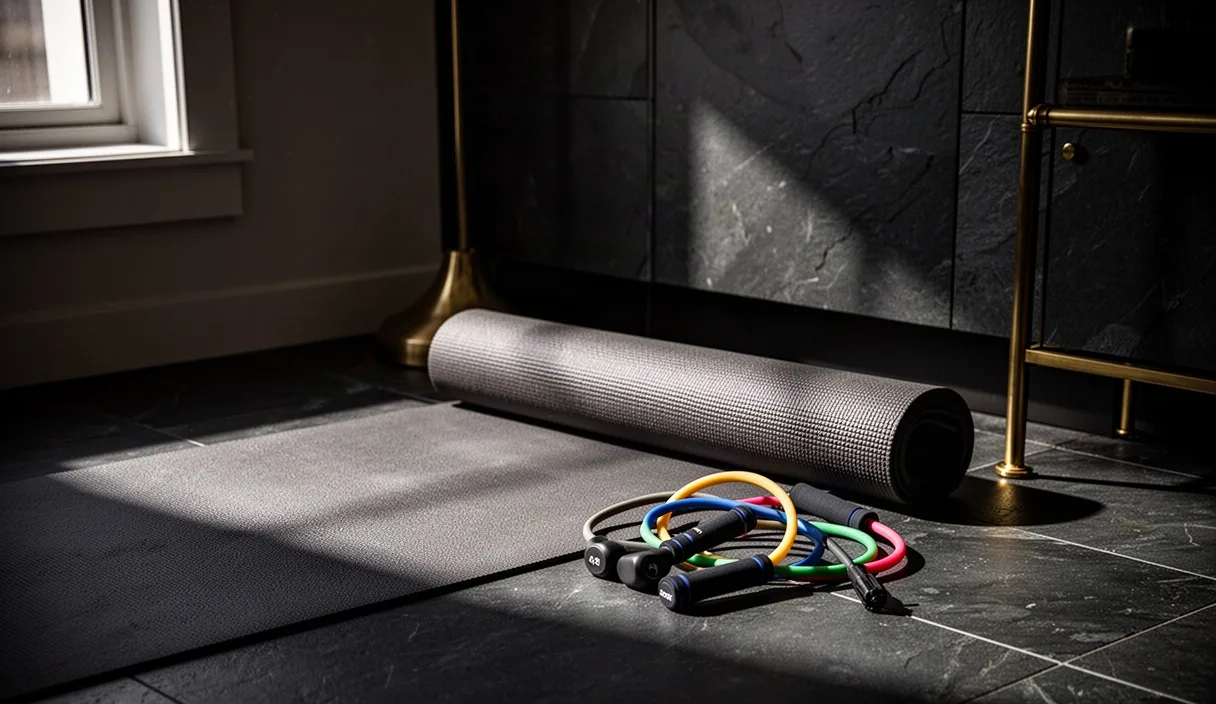

Setting up a home training space usually comes down to a choice between two low-cost systems: bodyweight training and resistance band training. Both can build strength, both fit in a small room, and both are frequently recommended as a starting point for people who do not want to join a gym. The two methods are not identical, though, and the differences matter once a person moves past the first few weeks of general conditioning.
This article defines each method precisely, compares cost and space requirements, and outlines where each system covers exercise categories well or poorly. It also addresses two commonly overlooked gaps, pulling movements and grip work, along with injury considerations and a practical way to choose based on the time available per session. Where a physical limitation, injury history, or medical condition is relevant, consult a physician or physical therapist before starting either method.
Defining Bodyweight Training and Resistance Band Training
Bodyweight training uses the person's own mass as the resistance, moved through space by muscular effort against gravity. Push-ups, squats, lunges, planks, and pull-ups (when a bar is available) fall into this category. The resistance is fixed by body mass and cannot be adjusted mid-session without changing leverage, such as elevating the feet during a push-up or moving to a single-leg variation.
Resistance band training uses elastic tubing or flat bands that create tension proportional to how far the band is stretched. Bands are usually sold in a graded set, for example light, medium, heavy, and extra-heavy, often color-coded and rated by approximate pound-resistance at a set stretch length (commonly 3 to 5 pounds for light bands up to 30 to 50 pounds for heavy bands at full stretch). Resistance increases as the band lengthens, which produces a different force curve than bodyweight movement, where resistance stays roughly constant through the range of motion.
The practical distinction: bodyweight training is limited by leverage and body mass, while band training is limited by band tension and anchor points. A person can be strong enough to do 30 push-ups but still find a heavy resistance band difficult to pull in a strict row, because the two methods load muscles differently through the range of motion.
Cost and Space Comparison
Bodyweight training requires no equipment for most core movements. A pull-up bar, if wanted, costs roughly 20 to 40 dollars for a doorway-mounted version and requires a doorframe rated to hold it, typically listed on the packaging (commonly 220 to 300 pounds of user weight capacity). Beyond that, a yoga mat (10 to 25 dollars) covers floor-based work.
Resistance band sets range from about 15 dollars for a basic set of three or four loop bands to 60 to 100 dollars for a full set with handles, ankle straps, and a door anchor. Bands pack into a bag smaller than a shoebox and weigh under two pounds as a full set, which makes them easier to travel with than a pull-up bar or free weights.
| Factor | Bodyweight | Resistance Bands |
|---|---|---|
| Typical starting cost | 0 to 40 dollars | 15 to 100 dollars |
| Floor space needed | Roughly 6 by 4 feet | Roughly 6 by 4 feet, plus anchor point |
| Portability | None to carry | Fits in a small bag |
| Storage | None required | Small drawer or hook |
Neither method requires a dedicated room. A doorway, a stretch of hallway, or a corner of a bedroom is enough for both. The main space difference appears with band anchoring: some band exercises need a fixed point at ankle height, waist height, or overhead, which a door anchor or a sturdy piece of furniture can usually provide, but this adds a step that bodyweight training does not require.
Progression Options for Each Method
Progression in bodyweight training happens through leverage changes, added repetitions, or tempo changes, since body mass itself does not change on demand. Examples include moving from a knee push-up to a standard push-up, then to a decline push-up with feet elevated on a chair, then to single-arm progressions. Adding repetitions, for instance moving from 3 sets of 8 to 3 sets of 15, is a valid progression but has diminishing returns for building maximal strength once a person can comfortably exceed 20 to 25 reps per set.
Progression in band training happens by using a heavier band, shortening the band (which increases starting tension), doubling up two bands, or increasing the stretch distance. A person who can complete 15 controlled rows with a medium band can move to a heavy band, which typically adds roughly 10 to 15 pounds of resistance at the same stretch length, depending on brand and band type.
A key operational difference: band progression is often more granular. Weight sets usually jump in fixed increments (light to medium to heavy), but combining bands, for example stacking a light band with a medium band, allows finer adjustments than most bodyweight leverage changes permit. Bodyweight leverage changes tend to jump in bigger, less predictable increments, since moving from a bent-knee to a straight-leg pike push-up, for instance, can significantly increase difficulty in one step.
Exercise Categories Each Method Covers Well
Bodyweight training covers push-dominant movements (push-ups, dips using furniture), squat and lunge patterns, and core stability work (planks, side planks, dead bugs) effectively, because these movements naturally load well against gravity and body mass. It also covers general mobility and balance work well, since no equipment setup is needed for lunges, step-ups, or single-leg balance drills.
Resistance bands cover rotational and lateral movements well, such as banded lateral walks for hip abductors, banded wood-chops for the obliques, and banded shoulder external rotation for the rotator cuff muscles, movements that are difficult to load with bodyweight alone. Bands also allow constant tension through a full range of motion in isolation exercises like bicep curls or tricep pushdowns, which bodyweight training cannot replicate without added load.
- Bodyweight strengths: push-ups, squats, lunges, planks, glute bridges, step-ups
- Band strengths: lateral raises, external rotations, seated rows, face pulls, lateral walks, wood-chops
Common Gaps: Pulling Movements and Grip Work
Bodyweight training has a well-documented gap in horizontal and vertical pulling movements. Without a pull-up bar or a low bar for rows, there is no bodyweight equivalent that loads the back muscles (lats, rhomboids, mid-traps) the way a pull-up or an inverted row does. Some improvised options exist, such as using a sturdy table edge for a table row, but these depend on furniture that may not be rated for repeated pulling force and should be checked for stability before use.
Resistance bands close this gap directly. A band anchored at chest height allows seated rows, standing rows, and face pulls, all of which load the back muscles through a full range of motion. This is the single clearest reason many home setups pair a small amount of bodyweight training with bands rather than choosing one exclusively.
Grip work is a secondary gap in both methods, though less severe. Bodyweight training builds some grip strength incidentally through pull-ups or hanging, if a bar is available. Bands generally do not challenge grip strength significantly unless a thick-handled attachment is used, since most band handles are designed to be easy to hold. A person specifically training grip strength may need a separate tool, such as a hand gripper or a towel wrapped around a bar, regardless of which primary method is chosen.
Injury Considerations for Each Approach
Bodyweight training risk is concentrated around joint stress from repeated impact or poor form under fatigue, for example wrist strain from high-volume push-ups or lower back strain from poorly executed sit-ups. Because resistance is fixed at body mass, a person cannot easily reduce load mid-set if form breaks down, other than stopping the set or changing the exercise variation.
Resistance band risk is concentrated around two specific failure points: the band snapping or slipping from an anchor point, and sudden loss of tension if a band overstretches beyond its rated capacity. Manufacturers typically list a maximum stretch length or maximum resistance rating, and exceeding this repeatedly increases the chance of the band snapping, which can cause a facial or eye injury at close range. Inspecting bands for small tears or thinning before each use is a reasonable precaution, and a band showing visible wear should be replaced rather than used at reduced tension.
Both methods carry a shared consideration: neither corrects poor form automatically. A person recovering from a joint injury, or with a diagnosed condition such as a rotator cuff tear or lumbar disc issue, should get individualized guidance from a physical therapist or physician before starting either bodyweight or band-based programming, since general advice in this article does not account for personal medical history.
Choosing Based on Available Time per Session
For sessions under 15 minutes, bodyweight training is usually faster to start, since there is no setup, anchoring, or band selection involved. A person can begin a circuit of push-ups, squats, and planks immediately with zero equipment handling time.
For sessions of 20 to 40 minutes, resistance bands become more practical, because the setup cost (attaching a door anchor, selecting a band) is a small fraction of the total session and the exercise variety gained, particularly for pulling and rotational movements, justifies the few minutes of setup.
For mixed or longer sessions, many practical home programs alternate: bodyweight movements for the first 10 to 15 minutes as a warm-up and push/leg work, followed by band-based rows, face pulls, and lateral work for the back and shoulders. This sequencing avoids the pulling gap described earlier without requiring a second piece of large equipment such as a pull-up bar.
Common mistakes
- Buying only one band resistance level, which limits progression once the initial band becomes too easy or too hard for a given exercise.
- Anchoring a band to an unsecured door or a doorknob rather than a rated door anchor strap, increasing the risk of the anchor slipping under tension.
- Relying only on bodyweight training for months without adding any pulling movement, leaving the upper back undertrained relative to the chest and shoulders.
- Ignoring visible fraying or thinning on a resistance band instead of retiring it, which raises the risk of a mid-set snap.
Next steps
Start by listing the exercise categories a session needs to cover: push, pull, squat, hinge, core, and rotation. Bodyweight training alone will leave the pull category thin unless a pull-up bar is added, so a small band set (at minimum a light and a medium band) is a reasonable low-cost addition even for someone primarily interested in bodyweight work. Inspect any band before each use, follow the manufacturer's stretch limit, and consult a physical therapist or physician before beginning either method if there is an existing joint injury, recent surgery, or diagnosed musculoskeletal condition.