 Maslin

Sleep debt and chronic fatigue produce similar complaints: heavy eyelids, slow thinking, irritability by mid-afternoon. But they are not the same condition, and treating one as the other wastes time. Sleep debt is a measurable, correctable deficit built from nights of insufficient rest. Chronic fatigue is a persistent, whole-body exhaustion that does not resolve with a few good nights of sleep and often signals something else happening in the body.
This distinction matters because the fixes differ. Sleep debt responds to consistent extra sleep over one to two weeks. Chronic fatigue does not follow that pattern, and pushing more sleep at it can leave a person just as tired, sometimes more frustrated. The sections below define each term precisely, then give a two-week tracking method to tell which one is affecting you.
Defining Sleep Debt
Sleep debt is the cumulative difference between the sleep your body needed and the sleep it actually got, measured in hours. If your body requires 7.5 hours nightly and you average 6 hours for 10 nights, you are carrying roughly 15 hours of debt. This figure is an estimate, not a lab value, because individual sleep need varies by roughly an hour from person to person and shifts slightly with age, activity level, and illness.
Sleep debt is acute and reversible under normal conditions. Research on sleep restriction, including the classic 2003 study by Van Dongen and colleagues published in Sleep, showed that people restricted to 6 hours a night for two weeks accumulated cognitive impairment equivalent to two full nights of no sleep at all, yet many participants did not rate themselves as sleepy. That gap between how tired you feel and how impaired you actually are is a defining feature of sleep debt: subjective perception lags behind real deficit.
Key markers of sleep debt include:
- A clear recent history of shortened sleep, whether from work schedule, travel, illness, or a newborn in the house.
- Improvement within one to three nights of extended sleep, typically 8 to 10 hours.
- Weekend or holiday "catch-up" sleep of 9 hours or more, followed by noticeably sharper mornings.
- Sleepiness that peaks at predictable low points, usually mid-afternoon and late evening, and lifts with caffeine, movement, or bright light.
Sleep debt does not fully clear in one long night. A single 10-hour sleep after a week of 5-hour nights repays only part of the deficit; full recovery from a substantial debt generally takes several nights of extended sleep in a row, sometimes a full week or more depending on how large the deficit was.
Defining Chronic Fatigue
Chronic fatigue, used here in the general sense rather than the specific diagnosis of Chronic Fatigue Syndrome (also called myalgic encephalomyelitis, or ME/CFS), refers to persistent exhaustion lasting six months or longer that is not proportional to exertion and is not resolved by adequate sleep. The distinguishing clinical feature of ME/CFS specifically is post-exertional malaise: a worsening of symptoms 12 to 48 hours after physical or mental activity that would not have tired a healthy person.
Chronic fatigue can also appear as a symptom of other conditions, including hypothyroidism, anemia, depression, long-term inflammatory illness, or medication side effects. In these cases the fatigue is a downstream effect of an identifiable process, and it typically does not improve meaningfully even when sleep duration and quality are already adequate, for example 7 to 9 hours nightly with minimal nighttime waking.
Markers that point toward chronic fatigue rather than sleep debt include:
- Fatigue present most days for three months or more, with no clear trigger such as a recent stretch of short sleep.
- No meaningful improvement after 7 to 10 consecutive nights of 8-plus hours of sleep.
- Exhaustion disproportionate to activity, sometimes appearing the day after mild exertion rather than during it.
- Accompanying symptoms such as unrefreshing sleep despite normal duration, muscle or joint pain without clear cause, or difficulty concentrating that does not track with how much sleep was logged the night before.
Chronic fatigue is a pattern that persists independent of sleep quantity. This is the single most useful operational difference between the two conditions, and it is the basis for the tracking method described later in this article.
How Recovery Time Differs Between the Two
The clearest practical test between sleep debt and chronic fatigue is response time to extended, consistent sleep. Sleep debt has a predictable recovery curve; chronic fatigue does not follow one.
| Factor | Sleep Debt | Chronic Fatigue |
|---|---|---|
| Typical recovery window | 1 to 7 nights of extended sleep | No consistent improvement even after 10+ nights |
| Response to a single long sleep (10+ hours) | Noticeable next-day improvement | Little or no change; may feel equally or more tired |
| Weekend recovery pattern | Sleeping in restores alertness by Sunday afternoon | Extra weekend sleep does not change Monday energy |
| Effect of caffeine or light exposure | Temporarily masks sleepiness effectively | Minimal or short-lived effect |
| Post-exertion response | Tiredness matches effort expended | Delayed worsening 12 to 48 hours after activity |
In practice, this means a person carrying sleep debt who sleeps 9 hours a night for a full week should feel a substantial, obvious improvement in alertness by day five or six. A person dealing with chronic fatigue who does the same thing typically reports feeling about the same, or reports that the extra time in bed did not translate into feeling rested, sometimes described as "unrefreshing sleep."
One caveat: severe, long-standing sleep debt, the kind built over months rather than weeks, can take longer than a week to resolve and can temporarily mimic chronic fatigue's flat response curve. This is why the tracking method below runs a full two weeks rather than a few days, giving enough time to separate a slow-recovering debt from a true non-response.
Common Overlapping Symptoms
Several symptoms appear in both conditions, which is why self-diagnosis by symptom checklist alone is unreliable. Both sleep debt and chronic fatigue can produce daytime sleepiness, difficulty concentrating, irritability, headaches, and reduced motivation for physical activity.
Both can also affect memory, particularly short-term recall and word-finding, and both can lower tolerance for stress, making minor frustrations feel larger than they are. Sleep debt and chronic fatigue can additionally coexist: a person with an underlying fatigue condition can also be running a sleep debt on top of it, which muddies the picture further and is one reason clinicians often ask patients to first correct sleep habits before evaluating for other causes.
The overlapping symptoms that are least useful for telling the two apart include general tiredness, brain fog, and low mood. The symptoms that are more useful for distinguishing them are the ones tied to timing and response, specifically whether rest improves things and whether exertion produces a delayed crash.
A Two-Week Self-Tracking Method
This method does not diagnose anything; it produces a data pattern that you or a clinician can interpret. It requires a notebook or phone app, and roughly two minutes of logging per day.
- Days 1 through 3: Record your current sleep duration and a subjective energy rating from 1 to 10 at three fixed points: on waking, at 2 p.m., and at 8 p.m. Do not change your habits yet; this is your baseline.
- Days 4 through 10: Extend total time in bed to 8.5 to 9.5 hours a night, keeping a consistent bedtime and wake time within a 30-minute window. Continue the same three-times-daily energy ratings.
- Days 11 through 14: Maintain the extended sleep schedule and add one moderate exertion note per day, for example a 30-minute walk or a normal workday's mental workload, then rate energy again the following morning.
- Review: Compare average energy scores from days 1 to 3 against days 8 to 10. A rise of 2 or more points on the 10-point scale across most ratings suggests the original problem was largely sleep debt. A flat or inconsistent trend, especially combined with a next-day energy drop after the moderate exertion notes in days 11 to 14, suggests something other than simple sleep debt is at play.
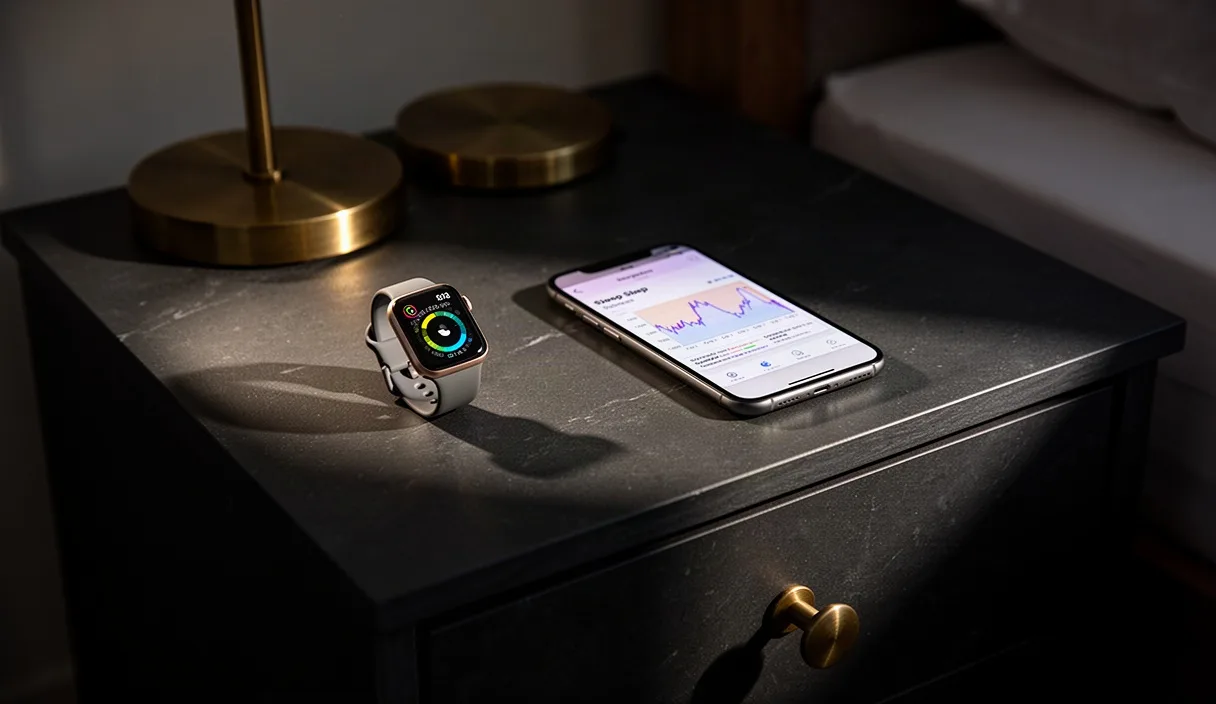
Track total sleep with a consistent method, whether a wearable, a simple bedtime and wake-time log, or a phone alarm app with sleep notes. Consistency of measurement matters more than precision; switching tracking tools mid-experiment introduces noise that makes the two-week comparison less reliable.
Lifestyle Factors That Mimic Chronic Fatigue
Several common habits produce fatigue patterns that look like chronic illness but are actually correctable lifestyle issues. Ruling these out before assuming a medical cause is a reasonable first step.
- Fragmented sleep from alcohol: Alcohol shortens the time it takes to fall asleep but disrupts sleep in the second half of the night, reducing REM sleep and causing early waking. Someone logging 8 hours in bed with regular evening drinking may still wake unrefreshed, resembling chronic fatigue's "unrefreshing sleep" marker.
- Undiagnosed sleep apnea: Loud snoring, witnessed breathing pauses, or morning headaches point toward obstructive sleep apnea, which fragments sleep dozens of times a night without the sleeper waking fully. This produces daytime exhaustion that does not improve with more time in bed, closely mimicking chronic fatigue.
- Low iron or vitamin D: Iron-deficiency anemia and low vitamin D are both associated with persistent tiredness and are identified through a simple blood test, not through sleep tracking.
- Irregular sleep timing: Sleeping 8 hours but at a different clock time each night (shift work, inconsistent weekends) disrupts circadian rhythm and can produce fatigue that looks chronic even though total sleep hours appear adequate on paper.
- High caffeine intake late in the day: Caffeine has a half-life of roughly 5 to 6 hours, so a 3 p.m. coffee can still be reducing sleep depth at 9 p.m., quietly lowering sleep quality while total time in bed looks sufficient.
Each of these factors is worth addressing individually, for two to three weeks at a time, before concluding that fatigue is unexplained. Changing more than one variable at once makes it hard to tell which change produced any improvement.
Common Mistakes
A frequent mistake is judging recovery from a single long weekend of sleep rather than a full week or two; one 10-hour night rarely resolves debt built over many weeks. Another is assuming any tiredness that persists past a few days must be chronic fatigue syndrome specifically, when it may be undiagnosed sleep apnea, anemia, or simple sleep debt that has not yet had enough recovery time. A third mistake is changing sleep schedule, diet, exercise, and caffeine intake all at once, which makes the two-week tracking data impossible to interpret cleanly.
Next Steps
Start with the two-week tracking method described above; it costs nothing and produces a concrete data pattern rather than a guess. If energy scores rise clearly with extended, consistent sleep, the issue was most likely sleep debt, and maintaining a stable 7.5 to 9 hour schedule for another two to three weeks should consolidate the improvement.
If energy stays flat despite consistent extended sleep, or if you notice a delayed crash after normal daily activity, bring your two-week log to a primary care physician. Basic bloodwork, thyroid function tests, and a discussion of sleep apnea symptoms are reasonable starting points, and a clinician is better positioned to rule out or identify an underlying condition than any self-tracking method alone. This article does not replace a medical evaluation, particularly if fatigue has lasted six months or longer or is accompanied by unexplained weight change, fever, or pain.