 Maslin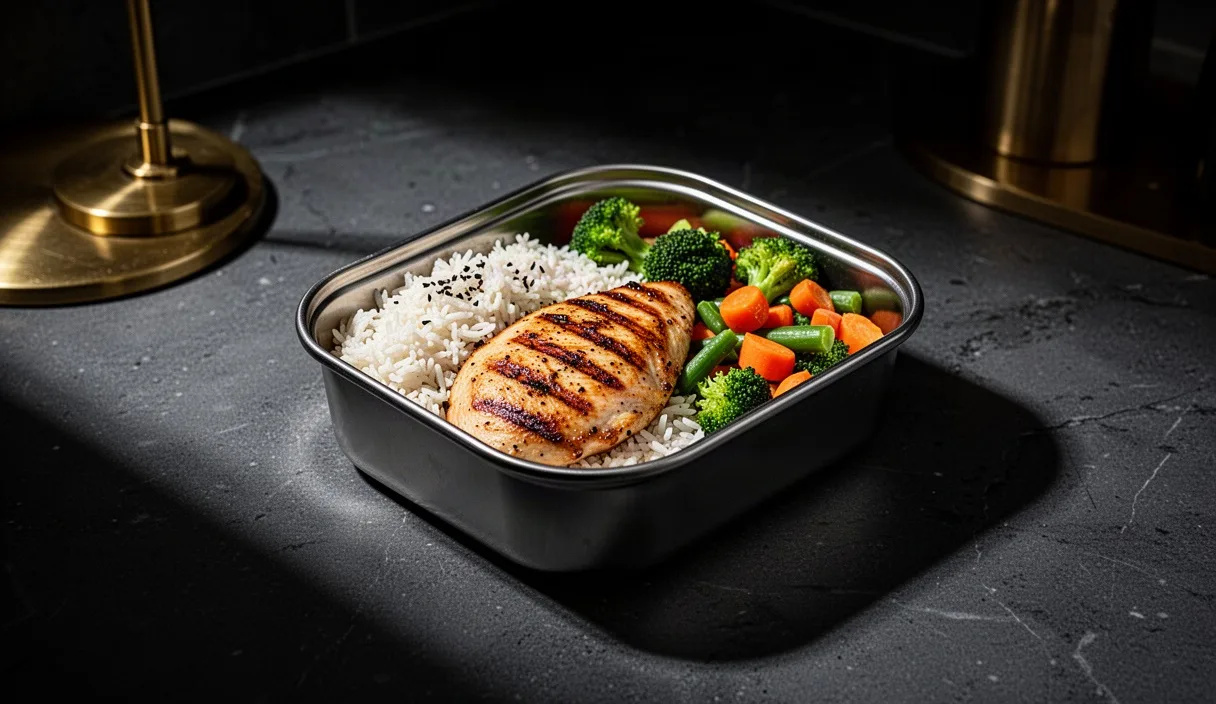

Men who train after an eight to ten hour workday face a specific logistics problem: the gap between the last meal eaten at a desk and the first meal eaten after a workout can stretch to six or seven hours, and the workout itself sits at the end of that gap rather than the start. Protein timing advice written for people with flexible daytime schedules does not map cleanly onto this pattern. This checklist addresses the actual constraints of a 9-to-5-plus-commute schedule: limited prep time, unpredictable meeting overruns, and training sessions that often start after 6 p.m.
The goal here is not to chase a narrow biochemical window but to build a repeatable structure that fits a workday. Below is a breakdown of what protein timing means, what current research supports, and a set of concrete meal and scheduling options for men training in the evening.
What Protein Timing Actually Refers To
Protein timing is the practice of scheduling protein intake around training sessions to support muscle protein synthesis (MPS), the process by which the body repairs and builds muscle tissue after mechanical stress. The term covers three related but distinct variables: how much protein is eaten per meal, how many times per day protein is eaten, and how close those meals fall to the training session.
Total daily protein intake is the dominant variable in this list. Research consistently ranks daily total above meal timing for outcomes like strength and lean mass. A common reference range is 1.6 to 2.2 grams of protein per kilogram of bodyweight per day for men doing resistance training, though individual needs vary with training volume, age, and goals. A 82 kg (180 lb) man training four times a week would target roughly 130 to 180 grams of protein daily under that range.
Meal frequency matters because MPS response to a protein dose is not linear and indefinite: it rises, peaks, and plateaus. Spreading protein across three to five meals rather than one or two large ones tends to produce more total MPS activation across a day, simply because more meals stay within the effective dosing range.
Timing relative to exercise is the narrowest and most debated of the three. It refers to how many hours before or after a workout a protein-containing meal is eaten, and whether that proximity meaningfully changes outcomes compared to eating the same amount of protein at a different time on the same day.
The sports nutrition Window: Current Evidence
The "sports nutrition window" is the claim that there is a short period, often cited as 30 to 60 minutes post-exercise, during which protein must be consumed to capture a meaningful training adaptation. This claim originated from studies on fasted training in the 1990s and early 2000s, where subjects trained without recent food intake and then were given protein at varying delays.
A 2013 meta-analysis by Schoenfeld, Aragon, and Krieger, and later work reviewing timing studies, found that when total daily protein intake is controlled for and equal between groups, the timing of individual protein doses relative to exercise has a small and often statistically insignificant effect on strength and hypertrophy outcomes over 8 to 12 week training blocks. The effect, where present, was smaller than the effect of total protein intake or resistance training volume.
This matters directly for after-work trainees because it removes the pressure to eat immediately at the gym door. If a man trains at 6:30 p.m. and does not eat until 8 p.m. after showering and commuting home, the delay itself is unlikely to blunt results, provided total daily protein and a reasonably timed pre-workout meal are in place.
The exception is fasted training. If someone has not eaten for four or more hours before a session, closing the post-workout gap becomes more relevant because both pre- and post-workout protein and carbohydrate needs are compressed into the recovery window. For most after-work lifters who ate lunch around midday and a small pre-workout snack, this scenario does not apply.
Pre-Workout Meal Options for Limited Time
A pre-workout meal serves two functions: it provides glucose and glycogen support for training performance, and it means the amino acids from that meal are still being absorbed and available during the session, which offsets the need for immediate post-workout protein. For someone finishing work at 5 or 6 p.m. and training soon after, timing this meal is the harder logistical problem, not the post-workout one.
A meal eaten 60 to 90 minutes before training, with moderate protein and easily digested carbohydrate, tends to sit well without causing gastrointestinal discomfort during lifting. Heavier, high-fat meals closer to training time are more likely to cause sluggishness or reflux during compound lifts.
- Desk-eaten option (2 to 3 hours before training): a turkey or chicken sandwich on whole grain bread with a piece of fruit, roughly 25 to 35 grams of protein.
- Short-window option (45 to 75 minutes before): Greek yogurt (150 to 200 g) with a banana, or a protein shake mixed with milk and a small amount of oats, roughly 20 to 30 grams of protein.
- Very short window (under 30 minutes): a whey protein shake with water, or a small amount of protein plus simple carbohydrate like a rice cake with honey, roughly 15 to 20 grams of protein, chosen for fast gastric emptying.
Men who commute directly from office to gym without time to sit down for a meal should prioritize the short-window or very-short-window options over skipping the pre-workout meal entirely. A small dose beats none, and it reduces reliance on training in a semi-fasted state.
Post-Workout Protein Sources and Quantities
Once training is finished, the target is a protein dose in the range shown to maximize the MPS response per meal, generally cited as 0.25 to 0.4 grams per kilogram of bodyweight, or roughly 20 to 40 grams for most adult men depending on bodyweight and age. Doses above this range are not wasted for overall daily protein purposes but do not proportionally increase the acute MPS response from that single meal.
Source matters somewhat less than total amount, but complete protein sources containing all essential amino acids, particularly leucine, are preferred. Leucine content is often cited as a trigger threshold for MPS, with roughly 2 to 3 grams of leucine per meal considered sufficient to stimulate a robust response in most adult men.
| Source | Typical Serving | Protein (approx.) | Leucine (approx.) |
|---|---|---|---|
| Whey protein isolate | 1 scoop (30 g) | 24 g | 2.5 g |
| Chicken breast | 150 g cooked | 35 g | |
| Cottage cheese | 200 g | 22 g | 2.0 g |
| Canned tuna | 1 can (140 g) | 30 g | 2.4 g |
| Eggs | 3 large | 18 g | 1.5 g |
For a man training at 6:30 or 7 p.m. and not eating a full dinner until 8:30 or later, a whey shake immediately after training combined with a fuller meal an hour or two later covers both the acute dose and the total daily target without requiring an elaborate cooking session at 9 p.m.
Scheduling Around Late Meetings or Commutes
The most common disruption to after-work training is a meeting or task that runs long, pushing the gym session later and compressing the time between the last meal and training. When this happens, the practical fix is not to skip food but to shift the pre-workout meal earlier in the afternoon rather than skipping it.
A reasonable approach: if a 3 p.m. snack (10 to 15 grams protein, some carbohydrate) is already part of the day, and the workout slides from 6 p.m. to 7:30 p.m. due to a meeting, that snack still provides some amino acid availability, and a very short pre-workout option like a shake can be consumed in the two or three minutes between leaving the office and reaching the gym locker room.
Commute time itself, whether by car, train, or bike, is a useful window for pre-workout nutrition that requires no preparation beyond carrying a shaker bottle or a piece of fruit. Men who drive can keep a shaker bottle and a tub of whey powder in the car; men who take public transit can carry a pre-mixed ready-to-drink protein shake, which has a shelf-stable format and does not require refrigeration until opened.
If training is delayed past 8 or 8:30 p.m. regularly, it is worth reconsidering whether a full dinner should be eaten before training (smaller portion, 60 to 90 minutes prior) with a lighter post-workout snack afterward, rather than training on a near-empty stomach and eating one large meal at 9:30 p.m., which can also disrupt sleep onset for some individuals.
Common Mistakes in Timing Protein Intake
The most frequent error is treating the post-workout window as mandatory and urgent while neglecting total daily protein intake. A man who sprints to consume a shake within ten minutes of finishing a set but only eats 90 grams of protein across the whole day is working against the variable that matters more.
A second mistake is skipping the pre-workout meal entirely due to time pressure, then training in a depleted state and expecting the post-workout meal alone to compensate. This can affect training performance itself, independent of any downstream recovery effect.
A third mistake is over-relying on supplements as a substitute for whole-food meals across the week. Shakes are a practical tool for the specific problem of limited time around training, not a replacement for regular meals that also provide micronutrients, fiber, and satiety.
A fourth mistake is inconsistent daily protein distribution, where breakfast contains 10 grams of protein, lunch contains 15, and dinner contains 60. Redistributing toward 25 to 40 grams per meal across three or four meals generally supports a more even MPS stimulus across the day than one large evening dose.
A Sample Weekday Checklist
The following is a template, not a prescription; individual calorie and protein needs vary by bodyweight, training history, and goals, and anyone with kidney disease, metabolic balance, or other metabolic conditions should consult a physician or registered dietitian before changing protein intake significantly.
- 7:30 a.m., breakfast: eggs or Greek yogurt, roughly 25 to 30 g protein.
- 12:30 p.m., lunch: chicken, fish, or legumes with a starch, roughly 35 to 40 g protein.
- 3:30 p.m., desk snack: cottage cheese or a small protein bar, roughly 15 to 20 g protein.
- 5:45 p.m., pre-workout (60 to 90 min before training): banana with a small shake or yogurt, roughly 15 to 25 g protein.
- 6:45 to 7:45 p.m., training session.
- 7:50 p.m., immediately post-workout: whey shake, roughly 25 to 30 g protein.
- 8:45 p.m., dinner: lean meat or fish with vegetables, roughly 30 to 40 g protein.
This structure totals roughly 145 to 195 grams of protein across seven feeding points, spaced closely enough that no single gap exceeds four to five hours during waking hours. Adjust portion sizes to individual bodyweight and confirm the resulting daily total against a target range calculated from current bodyweight, and revisit the plan with a dietitian if training volume, weight goals, or health status change.